I taught middle school for many years and consulted with schools across the country and internationally in the areas of curriculum and instruction, including technology integration. Now, I partner with two great guys at BoomerTECH Adventures. We work with boomers and seniors to help them be as digitally savvy as their grandchildren.
Sarah Rubin and Sherry Coyne and their students from the seventh grade Little River Team at Gorham Middle School participated in the Chewonki Foundation’s Zero Waste Challenge. According to the Chewonki website, middle school classrooms (grades 6,7,8) are invited and encouraged to take the challenge to help their schools save money and resources by evaluating their waste stream and creating a plan to reduce waste.
Sarah reports that the team visited Ecomaine earlier in the year. Ecomaine is the waste to energy plant and single stream recycling facility where all of their waste goes. Sarah reports, “Our kids got to see first hand where their trash and recycling goes from their homes and our school.”
“Our project has focused on analyzing our school’s waste, improving the recycling program, introducing composting, and trying to ‘buy smart’ which means buying reuseable and sustainably made products rather than disposable or unsustainable products.”
The team did well this year! They have not decided what they will do with the prize money yet, but the team is looking to improve composting at their school and to improve sustainability education for the other students.
The energy in the gym was palpable. Auburn Middle School students were so excited to meet and hear Maine’s own astronaut, Chris Cassidy! Space Day was off to a grand start. The anticipation had been building over the past few weeks. Students had gone online and identified 5 mini sessions they would like to attend from 19 possibilities. Each student would be able to go to 3 of their picks.
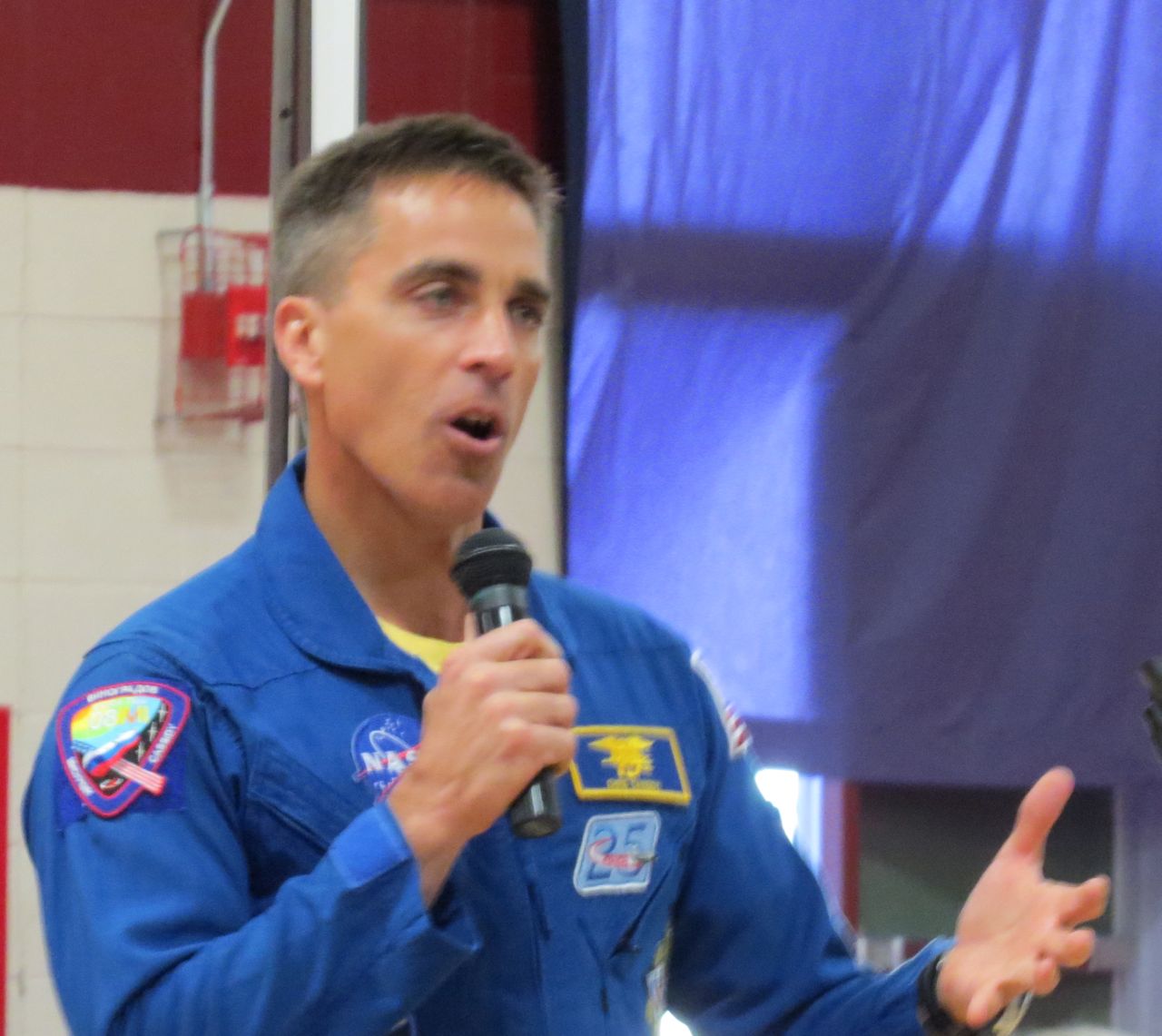
Chris Cassidy, graduate of York High School. the US Naval Academy and MIT, spent 6 months aboard the International Space Station.
The choices of mini-sessions included:
EarthKAM presented by students from Brunswick Junior High School
What’s Out There? Exploring the outer solar system
Living and Working in Space–No Shower, No Shoes, No Problem
Engineering–Your Ticket to Space and Beyond allowed students to simulate the work of an engineer
Robots Are Everywhere–even here in Maine!
Come Fly Away with paper airplanes to explore the forces that make flight possible
If You Build It demonstrates what civil engineering is all about
Why did the sun come to Auburn Middle School? To get brighter, of course!
The assembly opened with Principal Jim Hand welcoming students and guests. Representatives from Senators Susan Collins & Angus King, Representative Mike Michaud, and the Maine Department of Education followed with greetings and wishes for an extraordinary day.
Of course, Astronaut Chris Cassidy was the main attraction of the whole school assembly. A former Navy Seal who served in Afghanistan and the Mediterranean, Chris was selected by NASA in 2004 for astronaut training. While on the International Space Station, he completed 6 spacewalks.
From the video depicting life on the Space Station
During his talk he shared with students a video which vividly showed what life is like in space. Afterwards he invited students to ask questions. Hands shot up immediately. One perceptive question related to how the astronauts handled altercations in space. Chris replied that the training and work required collaboration at the highest level and that personal disagreements really were not an issue.
After the assembly students and teachers went off to their various mini-sessions.
At the Engineering–Your Ticket to Space and Beyond session presented by Shelia Pendse from the University of Maine’s School of Engineering, students learned about creating prototypes and testing them by trying to build the tallest free-standing marshmallow tower.
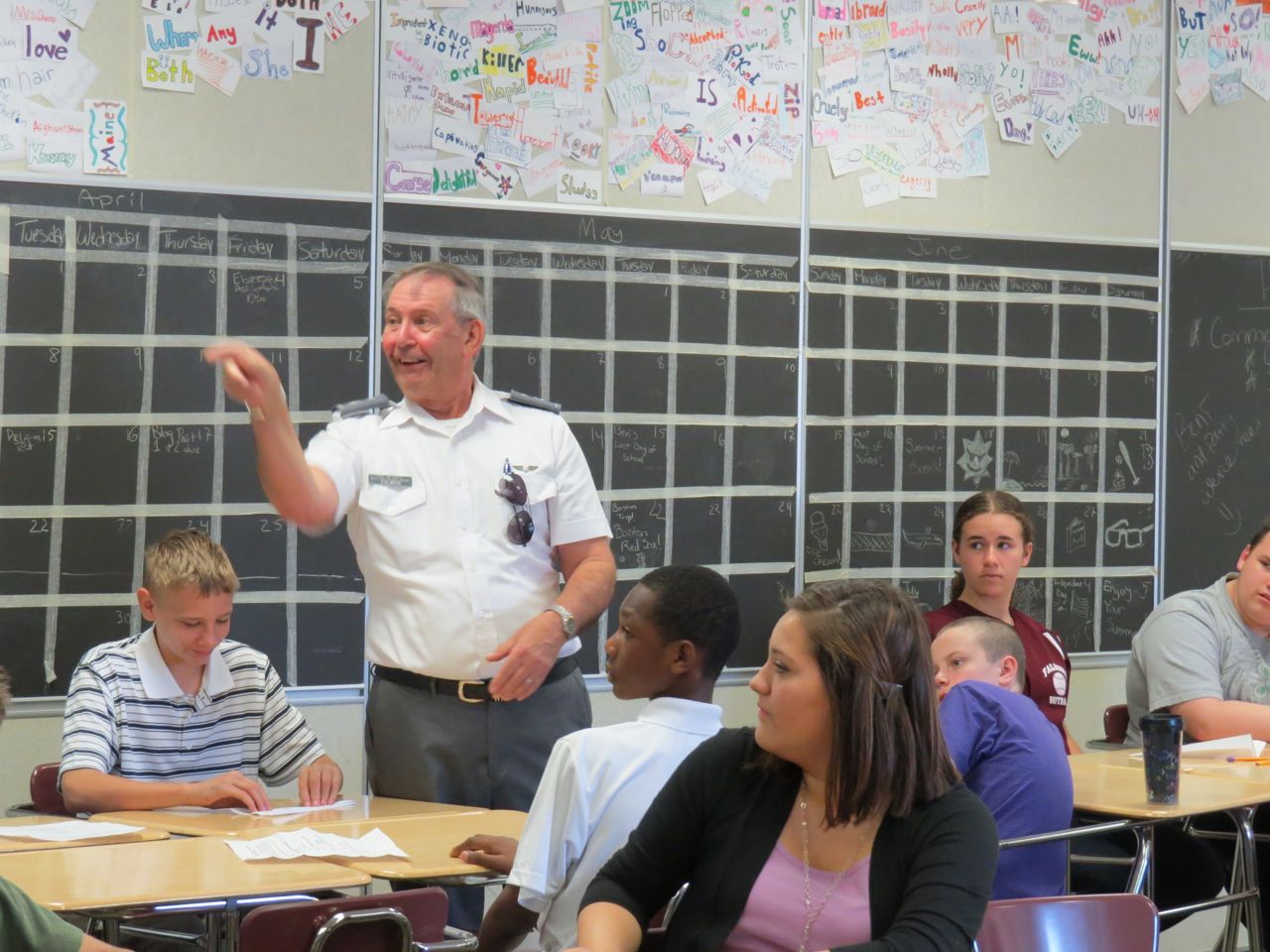
Students watch the flight of a paper airplane as Art Philbrick from the Civil Air Patrol explains how a fold here and a tuck there will make it fly straighter and longer.
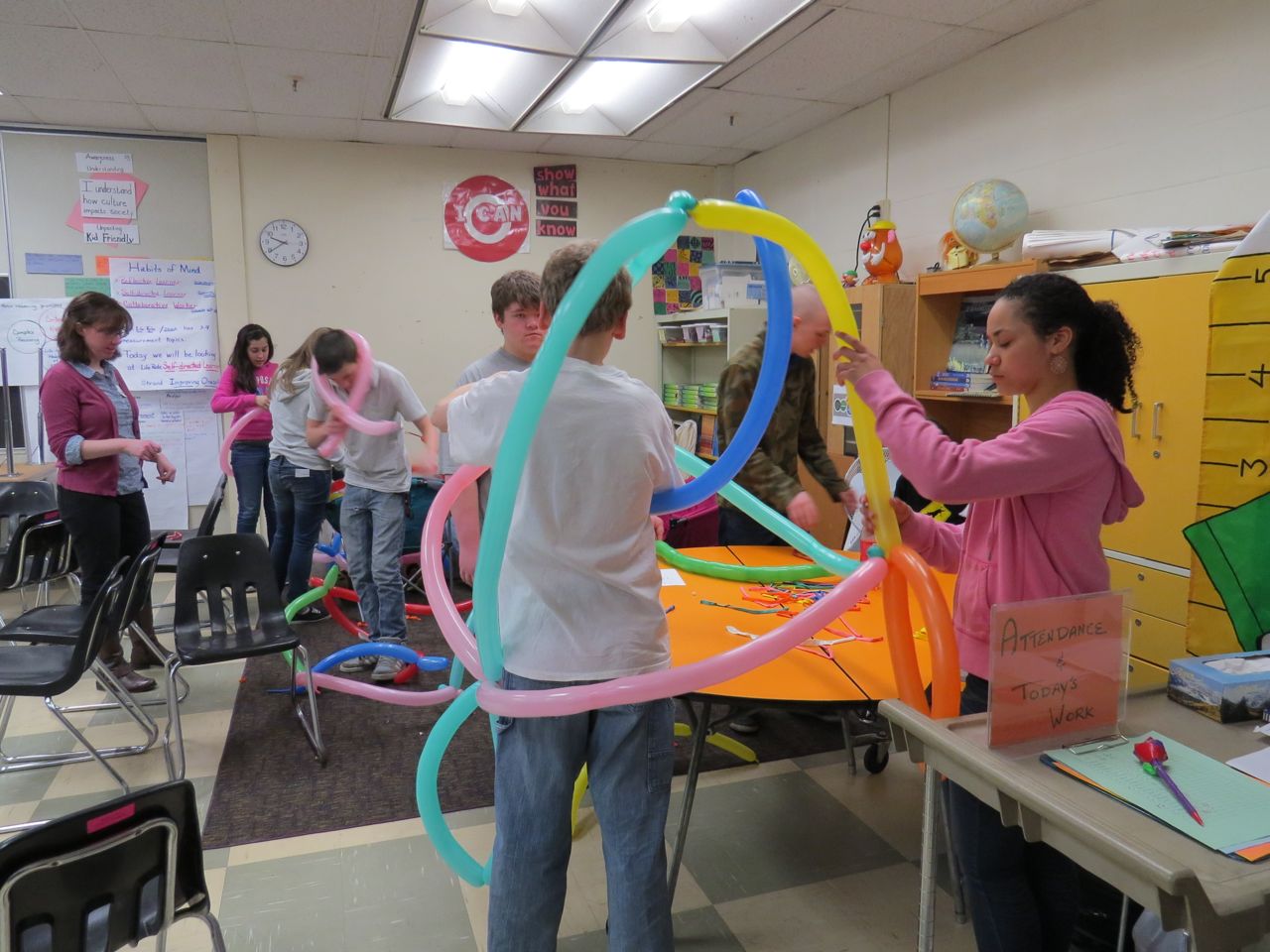
Lauren Swett from Woodard & Curran helped students understand what it must be like to construct an object in space as they wrestled balloons into large three dimensional structures.
Students presenting to other students is always a powerful experience. Here students from Brunswick Junior High school explain the EarthKam program and their participation in it.
Sailors from the USS Zumwalt came up from Bath Iron Works to lead students in hands-on activities: launching your own rocket, making UV bracelets, and examining space rocks.
Sharon Eggleston is the Northeast Regional Coordinator for Space Day. She shared that 7000 students across Maine participated in some sort of Space Day activity this year. If you are interested in learning more about Space Day and how your school might participate you can contact her at bseggs@gwi.net.
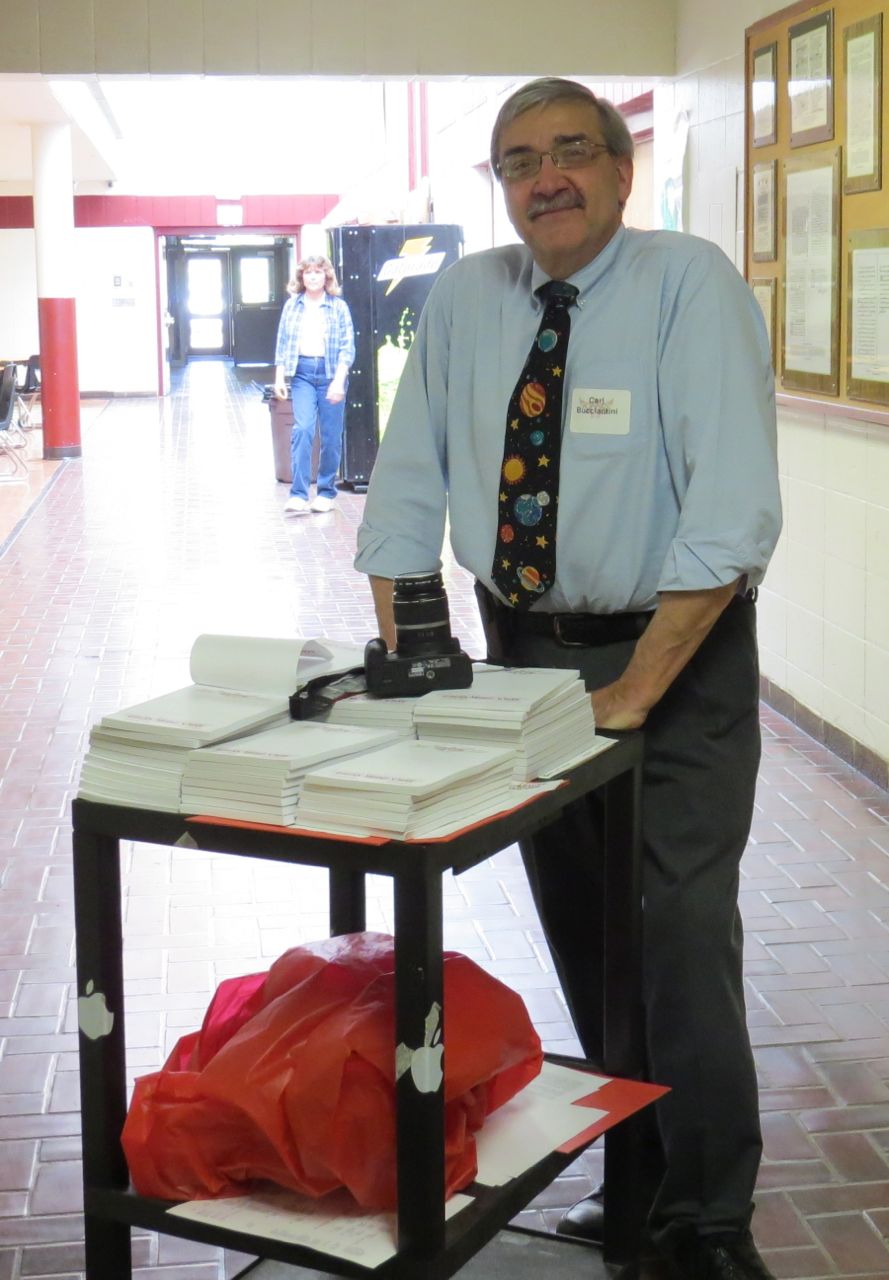
At the end of the day, Carl Bucciantini, Auburn Middle School coordinator for Space Day rolls his cart of supplies back to his office knowing the staff and students alike enjoyed a day of learning and exploration!
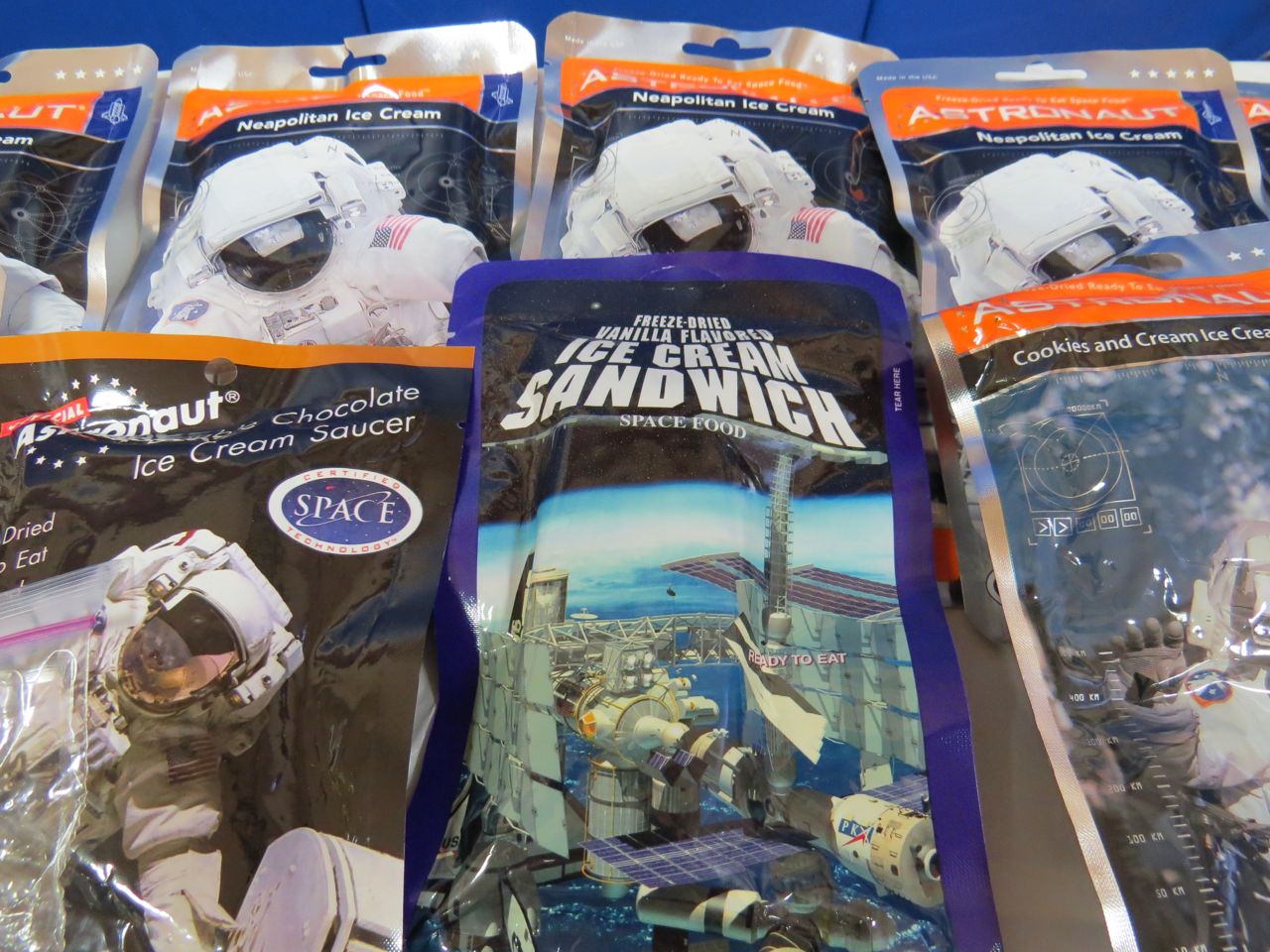
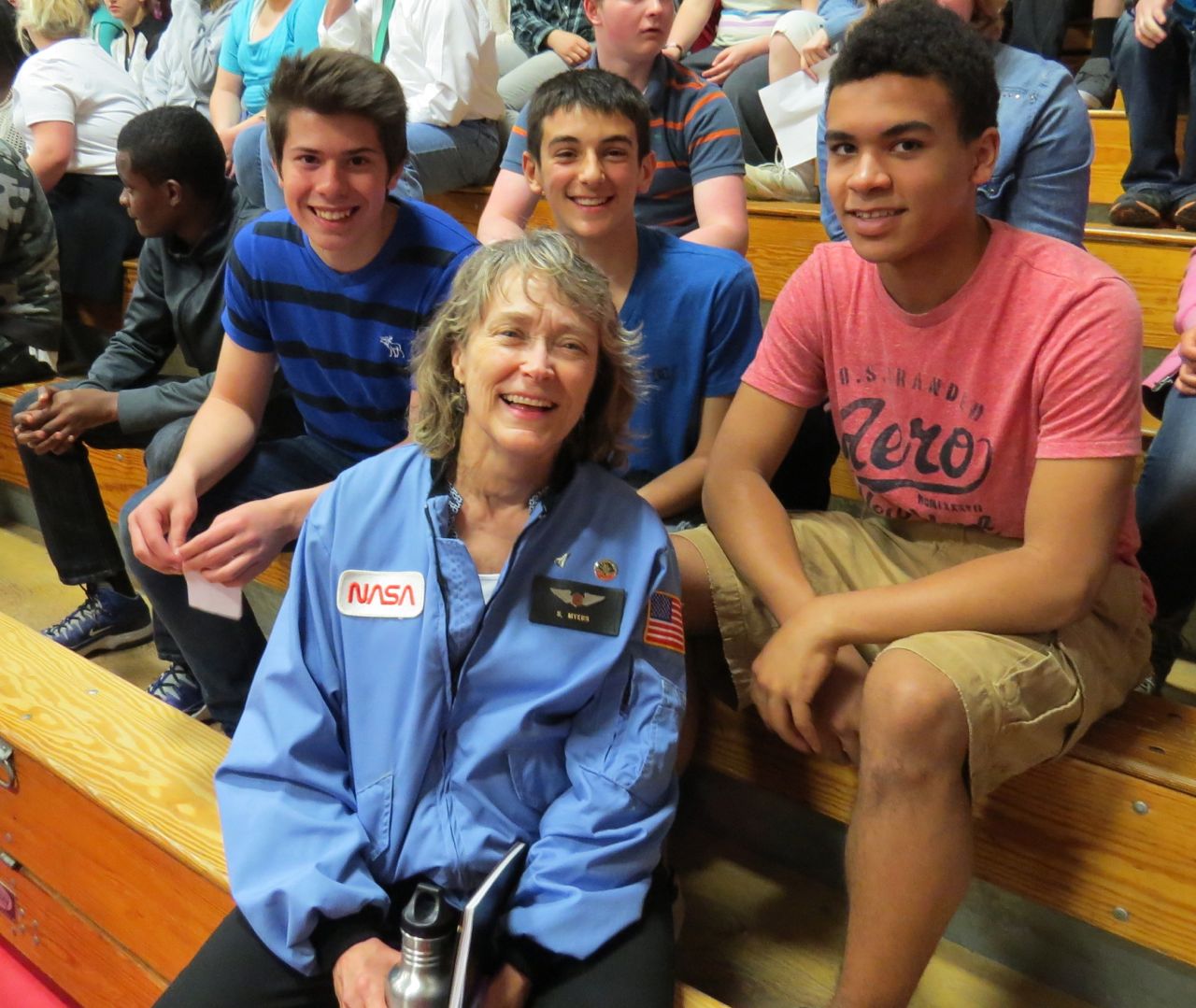
Hospitality Team & Guides for honored guestsSpace Goodies–Who knew you could have an ice cream sandwich in space?Sue Myers, Space Camp graduate and AMS science teacher.
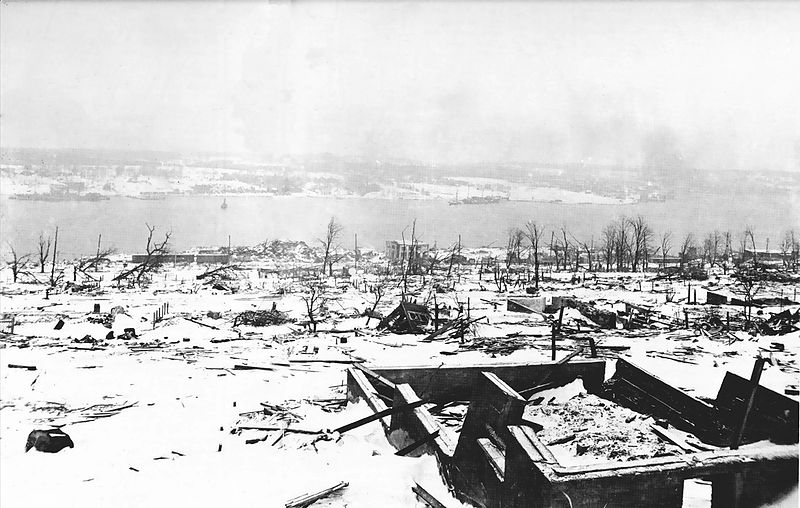
On December 6, 1917, Halifax, Nova Scotia experienced the largest man-made explosion the world had ever seen when the Mont Blanc, filled with explosives, collided with another ship. “The Halifax Explosion” webquest (http://connect.umpi.maine.edu/~terry.chalou/Webquests/10-11/The%20Halifax%20Explsoion/t-index.htm )provides links to the CBC site ( http://www.cbc.ca/halifaxexplosion/ ) containing many primary resources. Students can read about a fireman who was blown from his vehicle, caught in a tidal wave, and survived both to live another 54 years. In addition to the CBC resources, YouTube has several good videos about this event. My favorite is an interview with Peggy Gregoire who was a young student at the time.
After exploring these resources, the webquest task is to assume the persona of a person affected by the explosion and to write a letter about the day. To help students use the correct tone for their letters, there’s a link to war letters written in 1917. If your students want to make their letters look old, there are links to sites with directions for aging paper.
I used this webquest with a mixed grade level grouping of middle level students. Many of them told me that this was one of their favorite writing activities for the year because of the interesting resources.
High school students, central office administrators, community members, and teachers led workshops for Auburn Middle School students on CyberDay. Each student was able to choose 3 workshops to attend.
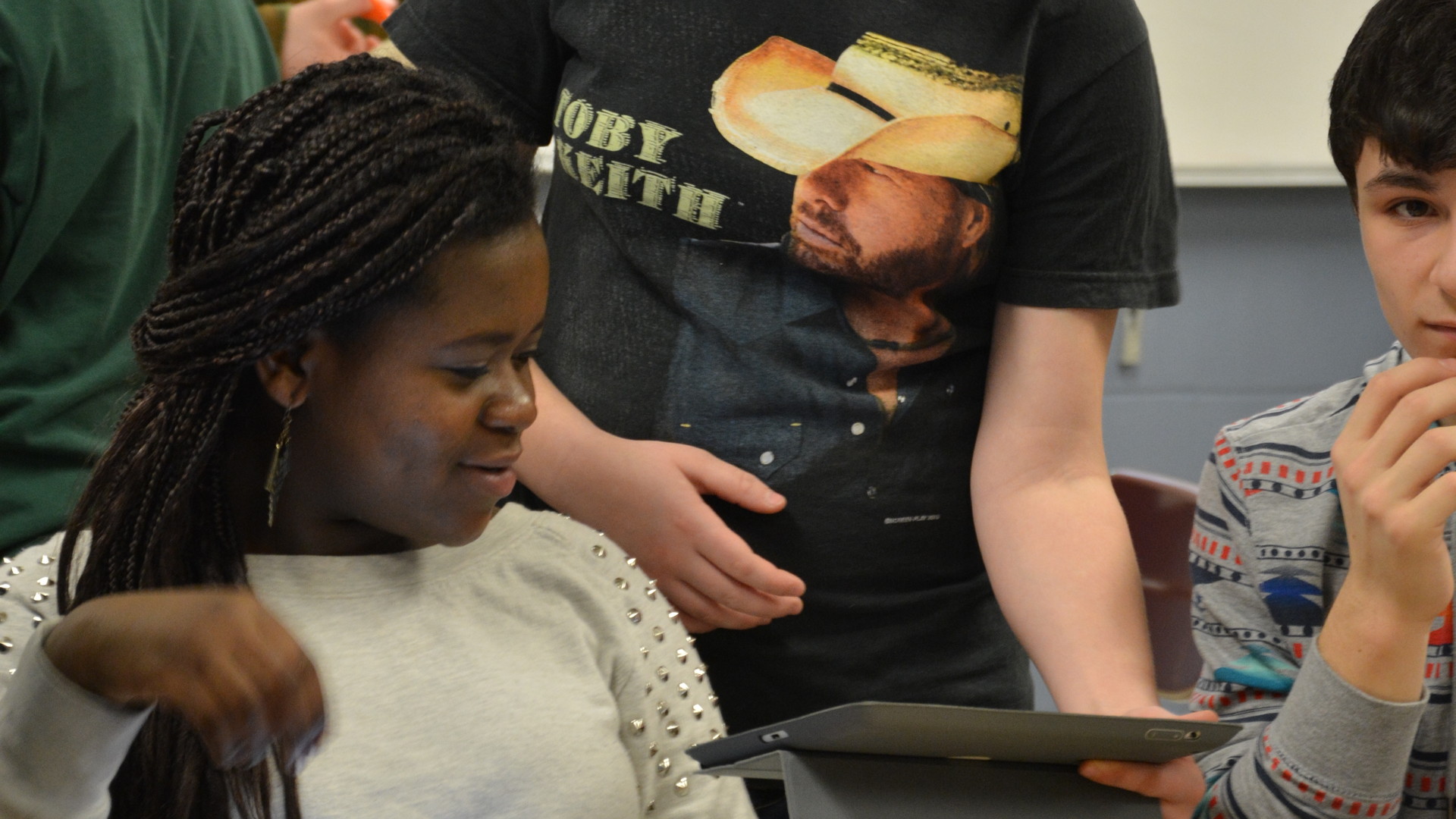
Like many middle schools in Maine, students and staff switched from laptops to iPads this year. CyberDay was a time to share what had been learned and explore new possibilities.
Some students opted to learn how to make commercials in a session entitled “Welcome to Hollywood” led by Jake Bazinet, a high school junior. The best student commercials were showcased on the Lewiston-Auburn local access channel.
Everyone got involved!
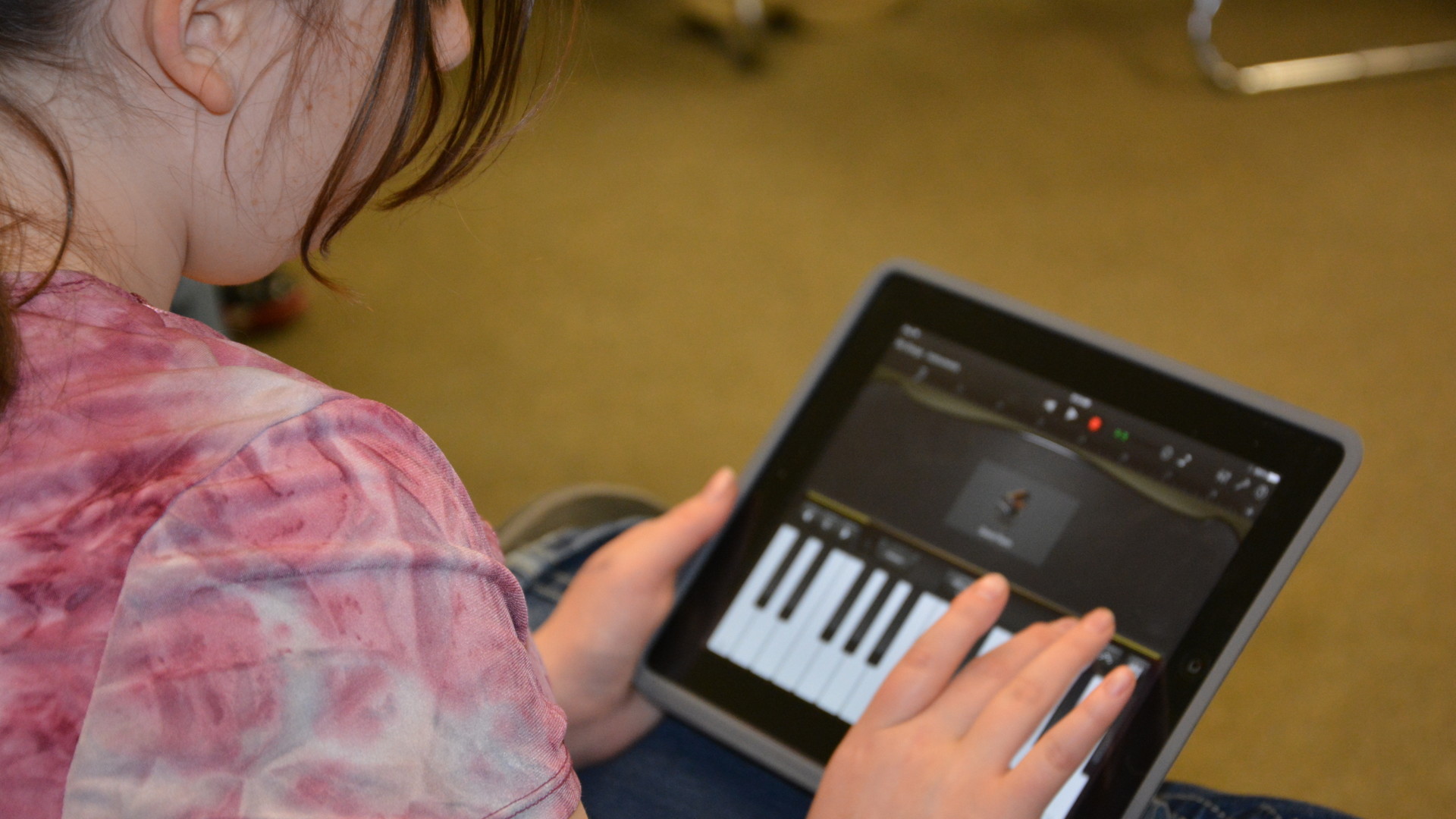
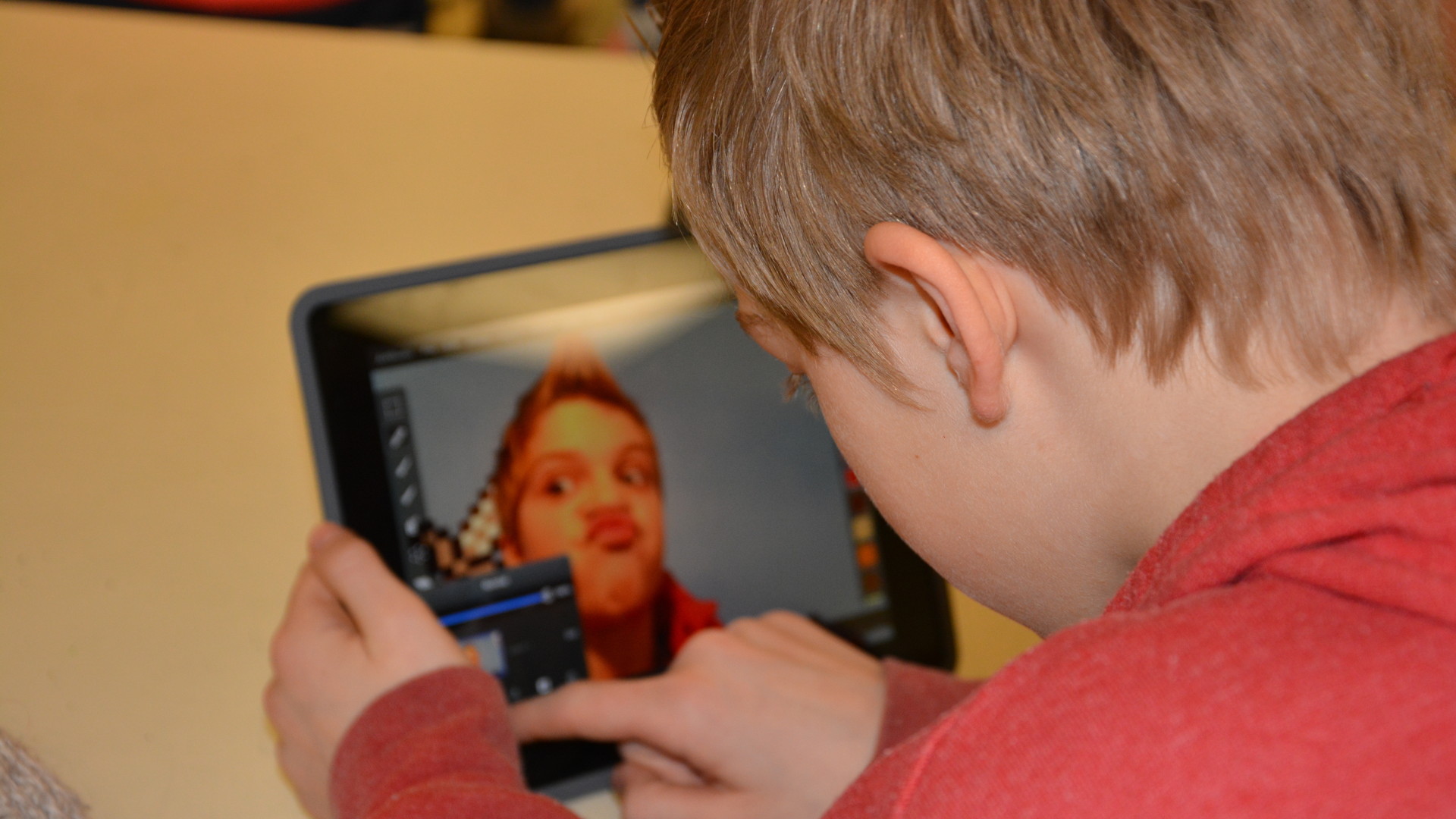
Music and movie making sessions were popular:
Making MoviesMaking Music
Sharing and collaboration characterized the event.
Classmates collaborate and share ideas and products.
This post was written by Kathy Bertini, an eighth grade teacher at Madison Junior High School
The annual Madison Blood Drive takes place each February at the junior high to replenish critically low blood supplies for the American Red Cross during the winter months. This particular interdisciplinary unit was created after a colleague attended the annual MAMLE conference and participated in a session put on by the Frank Harrison Middle School of Yarmouth that blended academics with community service.
The sixth grade was assigned the tasks of letter writing to encourage people to donate blood as well as learning what constitutes the parts of blood. The eighth grade completed detailed presentations about the cardiovascular system, showcased activities that keep your heart healthy and made 3-D versions of human blood based on a liquid’s density. In Art classes students created clay models of the human heart that were then painted and labeled with correct names.
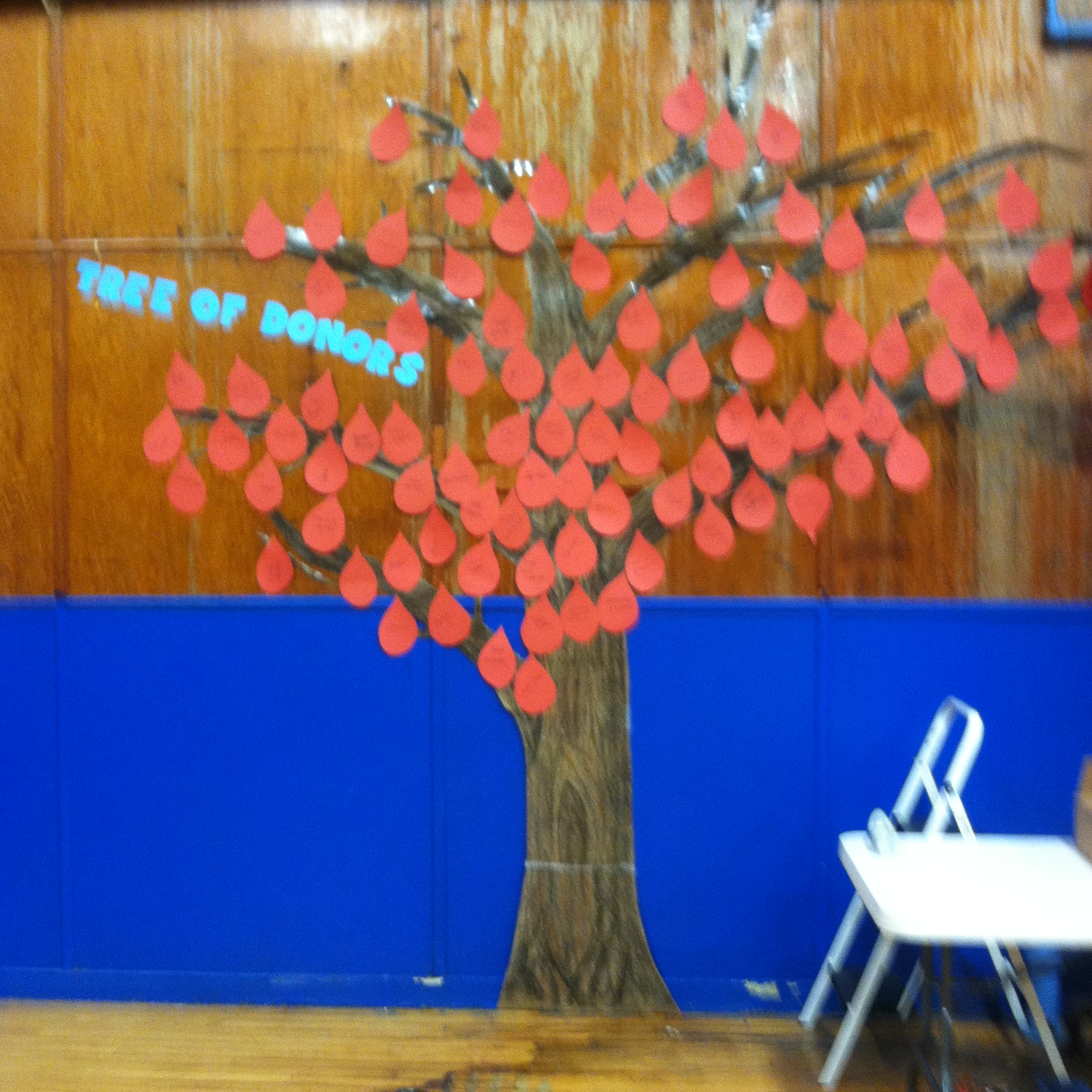
Tree of Donors
This year a new idea was added to the blood drive called the Tree of Donors. The Tree of Donors idea began with a visual of a caricature of a tree without any leaves. Then the sixth grade students cut out blood drops to represent leaves for the tree. After donors gave blood at the drive, their names were placed on each leaf and hung on the tree. The tree symbolized the importance of each blood donor as they became part of the donor tree. Sixth and eighth grade students were vital in assembling the initial tree and adding names to leaves as volunteers gave blood that day.
On the day of the blood drive, students were responsible for greeting people at the door, registering blood donors, escorting those who have given blood to the snack table, running the snack station, as well as the final break down and clean up. The Madison Junior High Blood Drive was showcased this year on WLBZ Schools That Shine segment for the academic connection to community service. This learning experience was made possible because of the MAMLE experience and resources available.
Middle schools across Maine contribute to the well being of their communities. Here are just a few examples!
Recently recognized as a School That Shines (Channel 6–WCSH program), Madison Junior High School students organized and ran a community blood drive at their school. Teachers were inspired to support this effort after they attended a Harrison Middle School (Yarmouth) presentation on the topic at a MAMLE Annual Conference.
Another School That Shines honoree is Georgetown Central School. Their 4-8th. graders are actively involved in Project Canopy. Students are learning data collection procedures as they gather information on tree growth and health, tree identification, and and local ecological issues. They will share this information with town officials responsible for creating policy impacting the town’s woodlands.
Anyone who lives in a coastal community has heard about the European green crabs, an invasive species that threatening the clamming industry. Two schools–Yarmouth’s Frank Harrison Middle School and Woolwich Central School–have been studying this immense problem and looking for solutions to share.
Becoming an United States citizen is a lengthy and sometimes arduous process. The smiles on newly naturalized citizens’ faces say it was well worth it. Students at the Middle School of the Kennebunks hosted a naturalization ceremony in March. The band played, the chorus sang, and Senator Angus King spoke!
We would love to hear how other schools are connecting with their community. Leave us a comment and share your school’s story.

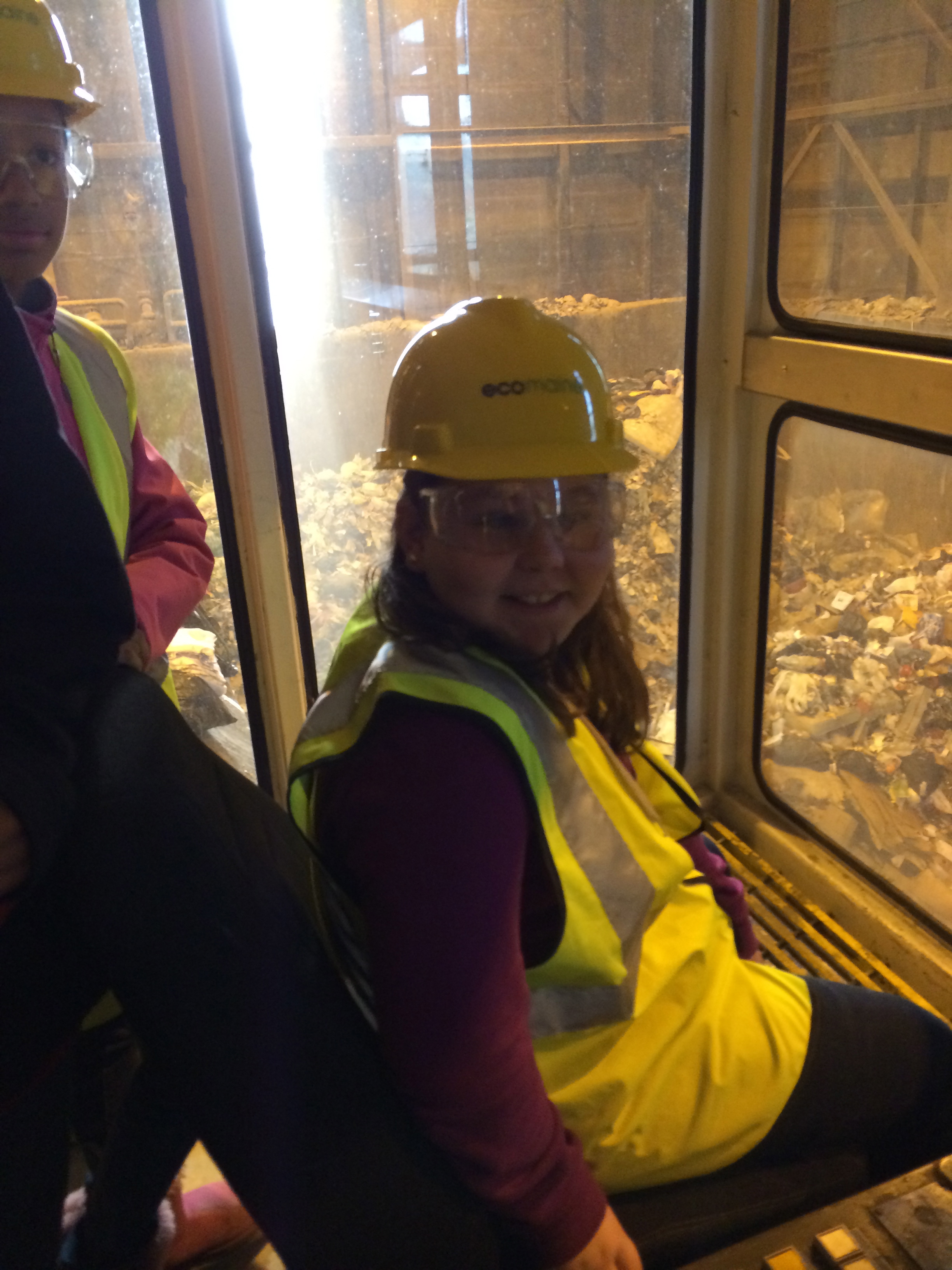 Sarah reports that the team visited Ecomaine earlier in the year. Ecomaine is the waste to energy plant and single stream recycling facility where all of their waste goes. Sarah reports, “Our kids got to see first hand where their trash and recycling goes from their homes and our school.”
 The team did well this year! They have not decided what they will do with the prize money yet, but the team is looking to improve composting at their school and to improve sustainability education for the other students.












 We have moved!
